How to Make Cotton Candy Without a Machine: Quick & Easy Method
If you’re craving cotton candy but don’t have a machine, you might wonder if you can make it by hand. The good news is, with just a few ingredients and a quick flick of a fork, you can create fluffy cotton candy strands at home.
By heating sugar carefully and using simple tools, you’ll be able to enjoy this treat without special equipment.
Keep reading to learn how to pull it off.
Can You Make Cotton Candy Without a Machine?
You can make cotton candy without a machine by manually spinning hot sugar syrup into thin threads. First, heat sugar to the hard-crack stage, around 320°F, which makes it viscous enough to create those delicate strands. Using a whisk or two forks, flick the hot syrup into the air in quick motions to allow it to cool and form fluffy webs. This technique requires multiple tries to perfect, as the strands may clump or break at first. For best results, consider using top popcorn picks with a lower moisture content to avoid sticky threads. After making your candy, clean the sticky residue from your utensils using hot water and soap to prevent buildup.
Incorporate color variations by adding liquid or gel food coloring to the syrup before heating. For flavor, mix in extracts such as vanilla or strawberry—avoid oils, which can change the texture. Work quickly because the sugar threads harden rapidly once cooled. Flavacol is a fine salt powder often used to season popcorn, and it can also be sprinkled over homemade cotton candy for a buttery flavor.
Humidity can be a challenge; elevated moisture levels will cause the threads to collapse or become sticky. Serve your cotton candy immediately after spinning for the best fluff and lightness. Though it requires some effort and speed, handcrafted cotton candy can be fun and flavorful, even if it won’t match the uniform appearance of machine-made versions.
Simple Ingredients and Tools for Machine-Free Cotton Candy
You only need a few basic ingredients and tools to make cotton candy without machines. Start with granulated white sugar as your main ingredient because it’s pure and neutral, providing the best texture and flavor. For a stable syrup, use either corn syrup or liquid glucose—both help prevent the sugar from crystallizing. Water is essential to dissolve the sugar, and a small pinch of salt enhances the flavor and consistency, similar to how popcorn salt works by improving taste and texture without dissolving. Adding a tiny amount of vinegar is optional but can improve smoothness. For consistent results, ensure your syrup reaches the proper hard crack stage on a candy thermometer, just as a slushie machine requires precise temperature control. Since you are working without a machine, your syrup must be handled quickly and carefully once it reaches temperature, much like the churning process in no-machine ice cream relies on timing for a smooth final texture.
For flavors and colors, you can experiment easily. Just add a few drops of flavor extracts like raspberry, vanilla, or bubblegum to customize your cotton candy. For coloring, use gel paste dyes—just a drop or two will color your syrup without thinning it out. You can also swap ingredients, such as replacing corn syrup with liquid glucose or modifying flavor options based on your taste.
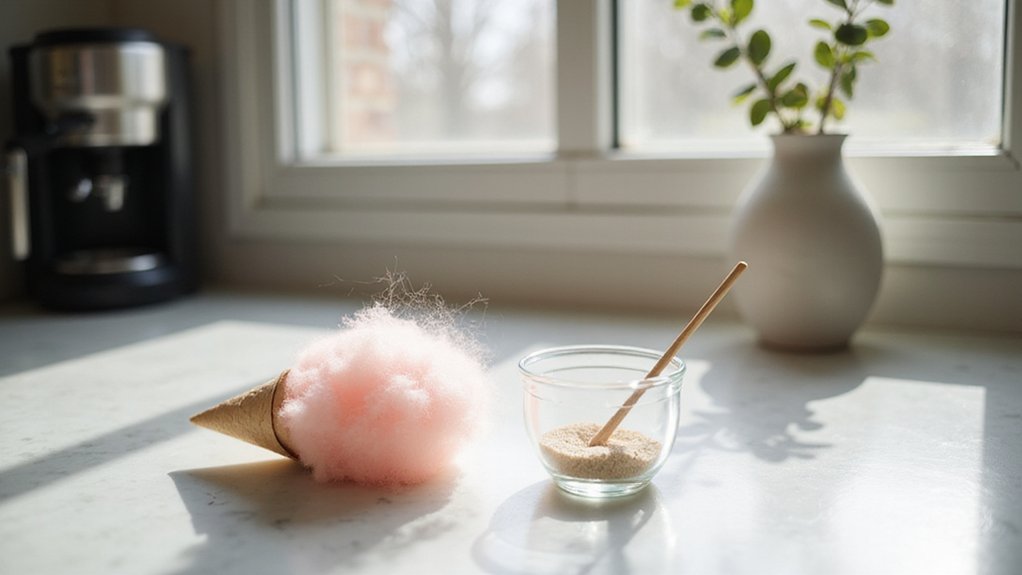
Tools needed are minimal: a medium saucepan to heat your mixture, a candy thermometer to monitor the temperature, and parchment paper to prevent sticking. To spin the sugar threads, you’ll use a whisk or fork—no special machine required. Serving is simple with paper cones or sticks. With these straightforward ingredients and tools, you can create endless delicious cotton candy flavors and colors.
How to Cook the Sugar Syrup Without Crystallization
To prevent crystallization when cooking sugar syrup, start with a clean, smooth, dry saucepan. This minimizes seed crystals that can trigger unwanted crystal formation. Adding an interfering agent such as corn syrup or a small amount of cream of tartar—about 1/4 teaspoon per cup of sugar—also helps inhibit crystallization. Gently heat the mixture, stirring only until all the sugar has dissolved; avoid over-stirring at high temperatures to prevent nucleation sites. Once the syrup reaches a boil, stop stirring to reduce agitation that promotes crystal growth. Briefly cover the pan to allow steam to wash down the sides, removing any stray crystals. Maintain a steady, undisturbed boil, as excessive boiling or movement can cause oversaturation or nucleation. Finally, let the syrup cool without disturbing it or tapping the pan, since any disturbance can introduce new points for crystal formation. For a consistently smooth result, matching the syrup’s clarity to the top-rated salt quality standards ensures even texture and prevents graininess.
How to Spin Fluffy Cotton Candy Strands With Forks
To spin fluffy cotton candy strands with forks, you need to develop a quick, repetitive flicking motion after lightly dipping the fork tips into warm sugar syrup. Hold two forks back-to-back with the tines facing outward, maintaining a steady grip. Dip the forks into the syrup only briefly to avoid clumping. Then, rapidly flick your wrist back and forth over a parchment-lined tray, which causes thin threads of sugar to form in midair. This flicking motion pulls the sugar into fine, hair-like strands. For best results, ensure the sugar syrup reaches the correct temperature for optimal thread formation, similar to the careful heating required for pretzel rod dough. For flavor variations, you can add extracts to the syrup before cooking, giving your cotton candy a personalized taste. If you don’t have forks, try using an alternative utensil like a whisk with cut ends, which also allows you to pull threads using the same flicking technique. Work in small batches and gather the spun floss by twirling it around a stick while it remains soft. Moving your wrist faster and making lighter, more controlled flicks results in finer, more delicate strands. Be careful not to press the cotton candy down, as that can crush its airy, fluffy structure. This method demonstrates that no specialized equipment is required for the process. For best results, consume the spun sugar immediately, since its delicate structure is not designed for extended storage and will quickly lose its texture. Using a healthier oil like coconut oil can help achieve a cleaner, more consistent syrup base with fewer impurities.
Fix Sticky, Soggy, or Crumbly Results Instantly
If your cotton candy becomes sticky, soggy, or crumbly, you can fix it immediately by managing moisture and handling. For sticky floss, transfer it into a sealed container right away and chill it briefly to firm it up. Lightly dust the strands with cornstarch to reduce surface stickiness. When dealing with soggy candy, remove it from humid environments and store it in a dry container with a desiccant packet to absorb excess moisture. If your floss is crumbly, let it rest sealed for a short period to allow moisture to settle without further loss. Avoid overhandling or compressing the cotton candy, as this worsens the texture. For future batches, use clean, dry tools and package quickly to prevent moisture exposure. To add variety, consider flavoring the sugar with extracts before spinning. For optimal presentation, serve cotton candy immediately on a dry plate or cone, and keep it away from steam and sunlight to maintain its delicate, airy texture. Using sturdy paper sticks helps support the floss and prevents it from collapsing during handling. Freezer burn can similarly ruin a dessert’s texture by removing moisture and causing ice crystals. For consistently perfect results, consider using a dedicated deep fryer with basket to control temperature and prevent moisture-related texture issues in fried accompaniments.