Can You Eat Freezer Burned Ice Cream? The Honest Answer
Wondering if you can still eat ice cream that’s been freezer-burned? The good news is, it’s safe to eat as long as it’s been kept at 0°F or below, since bacteria won’t grow there.
However, you’ll notice a change in texture and flavor, which might make it less enjoyable. Keep reading to learn what to look for and how to handle freezer-burned ice cream.
Is Freezer-Burned Ice Cream Safe to Eat?
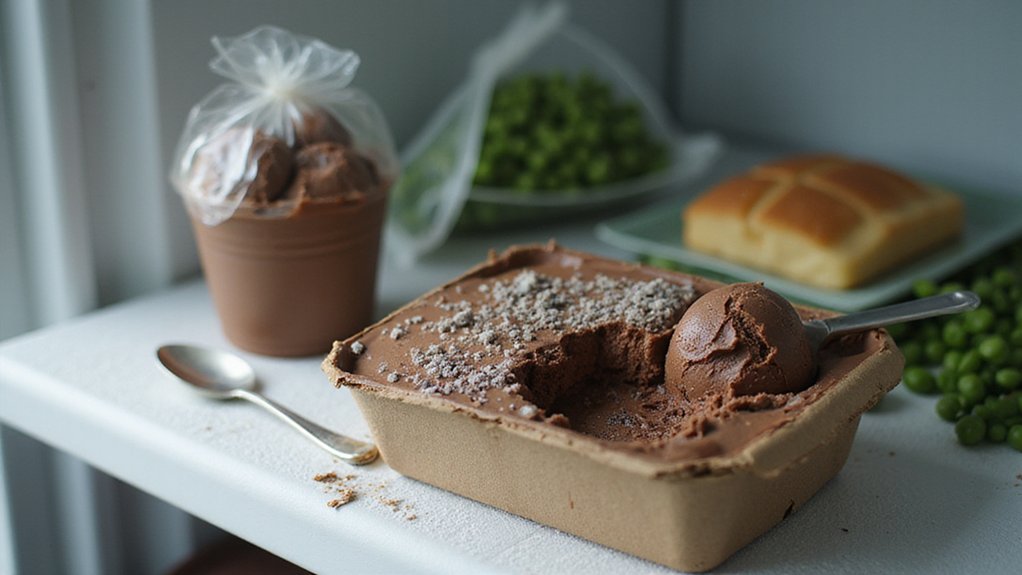
Freezer-burned ice cream is safe to eat as long as it has remained properly frozen at or below 0°F. Since harmful bacteria can’t grow at this temperature, consuming it won’t make you sick. Freezer burn occurs when air reaches the surface and moisture escapes, creating icy, dry patches. While it doesn’t pose a safety risk, it significantly affects the quality. The affected areas might look grayish-brown or frosty, but this visual change doesn’t mean it’s unsafe. You’ll notice the flavor dulls, becomes stale, or develops an off-taste. The texture also suffers; once ice crystals damage the smooth, creamy structure, improvements are impossible. Unlike freezer burn, popcorn kernels suffer quality decline from improper storage as well. Ultimately, you can still eat it, but don’t expect the same enjoyable experience as fresh ice cream. For those seeking to minimize waste or salvage a tub, comparing top picks on quality and value can help you identify which brands hold up better against freezer burn in the first place.
When Freezer Burn Means You Must Discard It
You must discard your ice cream if you notice visible mold, leaking packaging, or a broken seal. Scraping off the affected part doesn’t ensure safety, as contaminants may have already spread. Any signs of melting or refreezing, such as after a power outage, mean the temperature history can’t be trusted, so it’s safest to throw it away. Strong spoilage indicators like sour odors, slimy textures, or bitter off-flavors also signal decay and possible pathogen growth, making consumption risky. If your ice cream shows severe freezer burn—massive ice crystals, dried-out matte surfaces, or significant shrinkage—the loss of quality is so extensive that eating it isn’t worth the potential health hazards or disappointment. Unlike the precise ingredient ratios used in a slushie machine to achieve consistent texture, freezer burn creates unpredictable crystal growth that ruins the intended creamy consistency. When in doubt, it’s better to discard rather than risk foodborne illness.
How to Judge Freezer Burned Ice Cream Quality
To judge the quality of freezer-burned ice cream, start by examining its surface. White or grayish frost, large ice crystals, or dry, flaky patches indicate moisture loss. These signs predict texture deterioration beneath the surface. Scoop past the top layer—if you encounter a gritty, icy, or sandy mouthfeel, the damage extends deeper into the ice cream’s structure. Next, taste the ice cream; a mild, stale, or flat flavor typically results from air exposure and freezer burn. Usually, sections near the lid suffer first, so check those areas carefully. If the entire tub feels excessively hard, rocky, and flavorless, the ice cream is likely too compromised to enjoy. However, if only the surface shows light freezer burn, scraping off the affected layer can reveal creamy ice cream underneath that still maintains acceptable quality, provided the texture and flavor haven’t been overly affected. Combining these visual, textural, and flavor checks offers the most reliable way to assess freezer burn damage.
Why Freezer Burn Turns Ice Cream Gritty and Stale
Freezer burn turns your ice cream gritty and stale through two main processes: ice crystal growth and moisture loss. First, recrystallization happens when small crystals melt slightly and refreeze, merging into larger, crunchier crystals. These coarse particles create a rough, sandy sensation on your tongue, replacing the smooth, creamy texture you expect. This change in mouthfeel makes each bite unappealing and gritty.
At the same time, moisture escapes from the surface, dehydrating the ice cream and disrupting the balance of fat, air, and water that keeps it smooth. The ice cream’s structure becomes porous and denser. This degradation also causes flavor loss because oxidized fats and unbalanced solids develop a stale, cardboard-like taste. As a result, your ice cream no longer tastes fresh or rich but instead feels dry, icy, and off in flavor.
What Causes Freezer Burn in Your Freezer
Freezer burn occurs primarily due to poor packaging, exposure to fluctuating temperatures, and prolonged storage. When your ice cream is not properly sealed, it comes into contact with cold, dry air that draws moisture away from the surface. Loose lids, unsealed containers, or packaging that has deteriorated over time allow air to seep in, creating air pockets that speed up surface dehydration. For a machine that relies on airtight seals to keep ingredients fresh, regular cleaning is essential to prevent residue buildup that can compromise the lid’s fit.
Temperature fluctuations above 0°F can also cause freezer burn. Every time the door is opened or warm food is added, the temperature rises slightly, melting surface ice which then refreezes unevenly. This cycle worsens moisture loss and increases the risk. Prolonged storage amplifies these effects, as water molecules gradually sublimates from the outer layer of the ice cream. Frost buildup and failing door seals further expose stored food to dry, unstable air. Using a reliable appliance with heavy-duty lid seals can help maintain consistent internal climate and minimize dehydration.
Ultimately, freezer burn results from dehydration rather than spoilage, leading to dull, stale patches on your frozen treats. Keeping the lid tightly closed and maintaining a steady temperature help minimize these issues. Unlike freezer burn, snow cone syrup can spoil due to mold growth or off-odors if stored improperly.
Can You Fix Freezer Burn by Scraping the Surface?
Scraping off a thin, icy layer can salvage the rest of your freezer-burned ice cream. If the damage is mild, carefully removing the crusty surface with a spoon or knife can help preserve flavor and improve texture. Let the container soften slightly first to prevent chunks from breaking off unexpectedly. Be sure to discard the icy crust and avoid mixing it back into the ice cream. Similar to how repop popcorn kernels is not a safe or effective fix, scraping works well when freezer burn is shallow and only affects the surface. If the ice cream feels like a solid block of crystals throughout, scraping won’t fix it. In those cases, it’s best to toss it. For mild surface issues, however, scraping can significantly improve taste and mouthfeel, even if it doesn’t fully restore the original texture. Ice cream with surface freezer burn behaves much like fryer oil that has been lightly overheated, where the superficial damage can be managed without discarding the entire batch. Using a quality fine popcorn salt instead of table salt can also help prevent unwanted texture issues in similar situations.
How to Prevent Freezer Burn With Better Storage
To prevent freezer burn on your ice cream, keep it at 0°F or below using a reliable freezer thermometer. Store containers toward the back or bottom of the freezer rather than the door, where temperature fluctuations are more common. Before replacing the lid, press plastic wrap directly onto the surface of the ice cream to limit air exposure. For extra protection, wrap the container in an airtight freezer bag around the original carton, or store pints upside down to reduce frost buildup at the lid. Using smaller airtight containers for leftovers minimizes headspace and reduces the risk of freezer burn. Label your pints with dates and rotate older ones to the front, so you use them first. When scooping, only take out what you need and immediately return the container to the freezer. Allow the ice cream to soften on the counter rather than microwaving it to avoid melting and refreezing. When shopping, buy ice cream last, and transport it in an insulated cooler to keep it cold during transit. For buffets, you can use chafing dishes with Sterno to keep ice cream warm and prevent it from freezing solid.