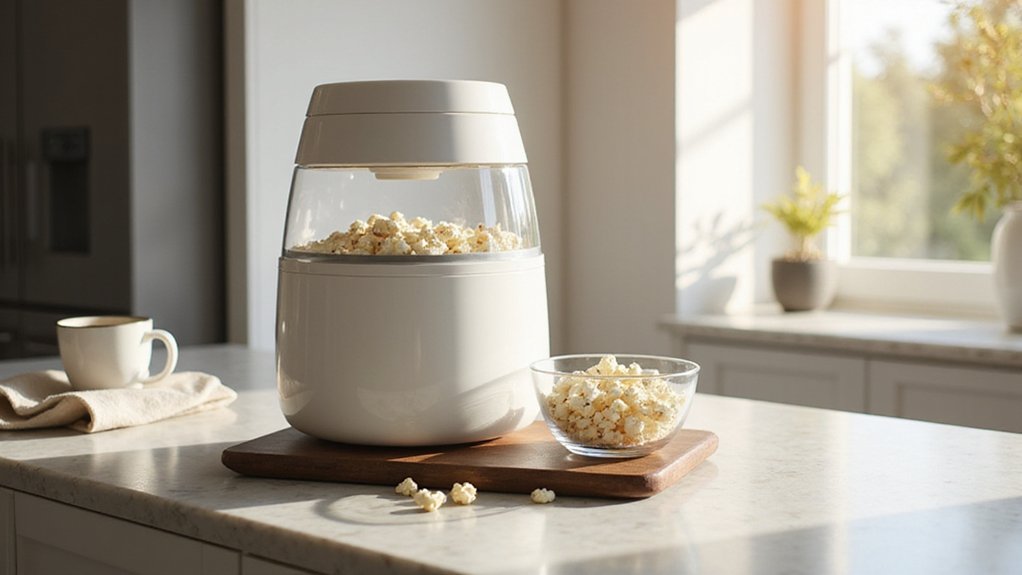
How to Use an Air Popcorn Machine: Setup & Use Tips
Getting your air popcorn machine to work smoothly can feel tricky at first, but with the right setup and some simple tips, you’ll be popping perfect, fluffy popcorn every time.
Knowing how to load it properly and when to turn it off makes all the difference in avoiding burnt kernels and ensuring a quick, mess-free experience.
In this guide, you’ll learn how to set up your machine safely and get the best results. Keep reading for easy tips that will help you master your air popper and enjoy healthier popcorn snacks.
Pick the Best Surface for Your Air Popper
A flat, level surface is the best choice for your air popper. It ensures stability and reduces the risk of tipping during operation. A level countertop makes sure the machine stays steady and works efficiently. Choose a surface that can withstand heat, since exterior parts of the popper can get hot and damage laminate or wood over time. This heat resistance is especially important when serving large crowds, similar to how a chafing dish requires a sturdy, heat-safe base to protect tabletops. Keep the area dry and clean to prevent electrical hazards and slips. Avoid water sources or greasy residue around the machine. Make sure there’s open space around the vents to allow proper airflow, which helps prevent overheating and maintains performance. This step mimics how cleaning a slushie machine also requires proper airflow around its vents to avoid motor strain. Choosing the right oil can further improve results, and top popcorn picks often guide users toward the best kernels for air poppers. Keep flammable objects like curtains or paper away from the popper. Managing the power cord so it doesn’t hang over edges or create a tripping hazard is also essential. A stable, dry, and well-ventilated spot helps make popping safer, easier to clean up, and reduces risks associated with heat and fire.
Measure Kernels Right to Avoid Burning
To avoid burning, it’s essential to measure the kernels correctly—most models specify about ¼ cup, though some may recommend ½ cup or a 3-ounce limit. Overfilling the chamber blocks airflow around the heating element, increasing the risk of scorched kernels and a burning smell. Conversely, underfilling hinders proper kernel movement, which can lead to uneven popping. Using the correct ingredient amounts, such as measuring syrup and water precisely for a consistent slushie texture, ensures reliable results in other machines as well. This principle of precise measurement is similar to using a compressor-based ice cream maker for consistent frozen desserts. Always pre-measure using a standard cup or your popper’s dedicated cap to ensure consistency. This simple step helps prevent overloading or underfilling, both of which can cause overheating or unpopped kernels. If you notice a burning smell, slow popping, or excessive heat around plastic parts, it likely means the chamber has been overloaded. Maintaining a level, measured batch allows hot air to circulate freely, promoting even popping and reducing the chance of burning. Stick to the recommended kernel amount each time for safe and optimal results. For those who also enjoy homemade treats, similar attention to ingredient ratios is key when selecting a top-rated soft serve machine for creamy, consistent output.
How to Load and Start Your Air Popper
To load and start your air popper, begin by ensuring your workspace is safe. Place the popper on a stable, heat-resistant surface and position the bowl directly underneath the chute to catch the popcorn. Make sure vents and the popping chamber are free from obstructions. Remove the cover from the popper, then pour kernels into the chamber according to your model’s specified capacity. Avoid exceeding the marked maximum line, as doing so can impair performance. For single servings, use about 2 tablespoons of kernels; for larger batches, up to ½ cup. Securely replace the cover before plugging the unit into a 120-volt outlet. Turn the machine on—some models heat immediately, while others may have a separate power button. Hot air will then circulate, quickly agitating the kernels and causing them to pop. The entire popping cycle generally lasts around 3 minutes. Once you hear a three-second pause between pops, turn off the machine. For safety, unplug it after use. Beginners often make the mistake of overfilling the chamber, which can lead to burnt popcorn and machine damage. For best results, consider using peanut oil for enhanced flavor and popping quality. For those who prefer oil-popped results with easier cleanup, a deep fryer with oil filter can also be a versatile option for making popcorn.
Fix Stuck Popcorn With a Gentle Tilt
To fix stuck popcorn with a gentle tilt, start by slightly tipping your air popper backward at the beginning of the popping process. This tilt increases the chamber angle, helping kernels stay inside longer and reducing premature escape into the bowl. You don’t need to hold the machine in place; instead, place a small, heat-safe object like a folded towel or silicone pad under the front for stability. Keep this tilt momentary—just while the first few kernels pop—and then return to a level position as the chamber fills with popcorn. If kernels continue to escape too quickly, repeat the tilt-and-level pattern to temporarily regulate the flow. This simple adjustment doesn’t repair underlying issues but helps more kernels pop before they slip out, minimizing waste and ensuring better use of your popcorn. Tilting back and forth throughout the cycle, as the popping slows, helps redirect kernels trying to eject back inside the machine. For consistent results, you can also use exact measurements of kernels and oil to match the precision of a movie theater machine and ensure even popping every time. To further reduce waste, you can reuse cooled, strained oil for frying other foods just like with fryer oil, as long as it is filtered and stored properly. Following a similar principle of careful temperature control, you can ensure chocolate melts evenly by using a double boiler or a low-heat setting.
When to Shut Off Your Air Popper
You should shut off your air popper as soon as you notice a pause of 3 to 5 seconds between pops. This indicates that most kernels have popped and you’ve reached optimal popcorn quality. Continuing to run the machine risks burning the popcorn or overheating the unit. Unlike some ice cream freezers that maintain steady performance even with freezer burn, air poppers require immediate attention to sound cues. Choosing the right sugar type can also impact performance when using a candy floss machine, though for popcorn, plain kernels work best. Reviewing the top popcorn machines can help you select a model with reliable heating and consistent airflow.
Always pay attention to sounds rather than waiting for every kernel to pop individually. A sustained gap in popping signals it’s time to turn off the machine. Avoid letting it run longer to prevent scorching or damaging the popper.
Additionally, if you smell burning, hear excessive noise, or see smoke, shut off the popper immediately. These signs point to potential safety hazards. Overfilling the chamber can also cause the machine to shut down prematurely due to thermal protection. In that case, unplug it and allow it to cool for about 15 minutes before trying again.
Always press the OFF button before unplugging. This helps prevent accidental restarts during cleanup. Remember, stopping at the first long pause in popping ensures you get well-cooked popcorn and prolongs the lifespan of your machine.
How Long to Wait Between Batches
After turning off your air popper, you should wait about 10 to 15 minutes before making another batch. This cooling period allows the appliance to reduce the risk of overheating and ensures that the next batch pops consistently. The exact time may vary depending on your model—some manufacturers recommend at least 10 minutes, while others suggest waiting up to 20 minutes. It’s important to check your specific manual to determine the recommended wait time.
You know the appliance is cool enough when the exterior feels cool to the touch. Rushing the process can stress internal components or cause plastic covers to warp. Waiting the proper amount of time helps maintain your device’s performance and longevity, making your popcorn popping safe and reliable. Plan your batch timing accordingly, factoring in these rests to avoid issues and keep your popcorn perfect every time.
Clean Your Popper After Each Batch
Unplug the popper and allow it to cool completely—about 10 to 15 minutes—before cleaning. Remove all leftover popped and unpopped kernels from the chamber to prevent residue buildup. Wipe the main body and popping chamber with a soft, dry cloth. For removable parts such as lids or measuring cups, wash them separately in warm, soapy water and dry thoroughly. Never soak the base or let water contact the heating element, as this can cause damage. Use non-abrasive materials like microfiber cloths or soft sponges to avoid scratching surfaces. Avoid steel wool or harsh cleaners that could harm your machine. To handle stubborn sugar residue on the machine, a soft cloth lightly dampened with warm water can be used for gentle wiping. Performing this quick cleanup after each batch keeps your popper free of debris, ensures optimal performance, and extends its lifespan. Make sure all components are fully dry before reassembling or storing to prevent moisture-related issues. Unlike a turkey fryer that requires exact oil amounts based on pot size and food volume, your air popper needs no oil at all, so cleaning focuses only on removing kernel residue and dust. For best results, apply the same consistent results mindset by following a simple post-use routine.
3 Air Popper Tips: Dry Kernels, Big Bowl, Skip the Butter Melt
To ensure optimal popping, start with dry, moisture-rich kernels. Kernels should contain about 13% moisture or higher; lower moisture levels mean they won’t build enough pressure to pop fully, resulting in mostly unpopped debris. Store kernels in an airtight container at room temperature to keep moisture consistent and prevent them from drying out. Using fresh kernels with proper moisture content makes the popcorn fluffier and reduces the number of unpopped pieces. For the best flavor, consider seasoning your finished popcorn with top seasoning options like those reviewed on other sites. Beginners often fail to check machine controls before the first use, which can lead to poor results.
Always place a large bowl under the chute before turning on the air popper. Because hot air can blow lightweight popcorn everywhere, a big bowl catches all the popcorn and keeps your area tidy. Using a sizable bowl ensures you don’t miss the first few pops, and it prevents spills or messes from flying popcorn.
Skip the butter melt inside the machine. Hot air poppers are not designed for oil or wet kernels, which can damage the popping chamber or clog the airflow. Instead, melt butter separately and season the popcorn after it has finished popping. This practice keeps your machine running smoothly and guarantees consistent, well-popped popcorn every time.