What Is a Chafing Dish? Full Explanation for Beginners
If you’ve ever wondered how to keep hot food warm at a gathering without drying it out or reheating constantly, a chafing dish might be just what you need. It’s a portable serving piece designed to hold cooked food at safe, steady temperatures, ideal for buffets or big events.
A chafing dish uses indirect heat, usually from a water bath and a gentle flame, to maintain warmth without cooking further.
Keep reading and you’ll learn how to use one effectively and keep your food perfectly warm.
What Exactly Is a Chafing Dish?
A chafing dish is a vessel designed to keep cooked food warm during serving. It’s commonly used in buffets and catering events as a hot-holding device rather than for cooking. Its primary function is to maintain a safe and consistent serving temperature, preventing dishes from overcooking or cooling down too quickly.
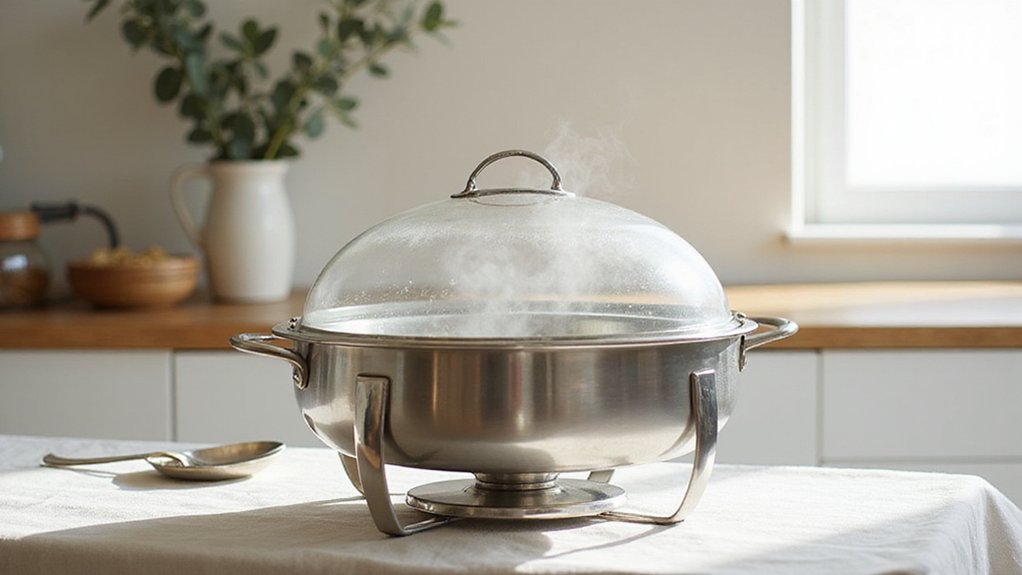
The system is composed of several parts: a supportive frame, a water pan, a food pan placed above the water, and a lid. A heat source, often fueled by a candle or Sterno, sits in the base to provide gentle, consistent warmth. You place fully cooked dishes into the food pan, and the design helps keep the food hot for hours without direct heat contact. This setup not only ensures food safety but also enhances presentation, making sure your dishes look attractive while staying at the perfect temperature. Compact and portable, a chafing dish is ideal for serving multiple guests at banquets, parties, and large gatherings. Unlike a popcorn maker, which uses direct heat to pop kernels, a chafing dish relies on gentle, consistent warmth to preserve already-cooked foods.
How Does a Chafing Dish Use Indirect Heat?
A chafing dish uses indirect heat by utilizing a water bath beneath the food pan. The heat source, typically a fuel can or electric element, warms the water rather than the food directly. As the water heats, it produces steam that gently and evenly transfers warmth to the food above. This method prevents the food from scorching and ensures consistent temperature distribution across the dish. This indirect heat method is similar to how top seasonings enhance popcorn without burning the kernels. To maintain proper temperature control, you should preheat the water before placing fully cooked food into the dish. Covering the food with a lid traps steam, helping to keep the temperature steady without boiling or overcooking. Adjust the flame or heat level to avoid creating high, aggressive heat that could harm the food’s texture. This setup is ideal for keeping prepared dishes warm during service rather than cooking or reheating from raw. For best results, you should use a precise ingredient ratio to ensure the water level remains effective throughout service. Relying on steam for heat transfer helps preserve the food’s texture and safety throughout buffet or catering presentations. For achieving consistent results with this method, you can follow even heat distribution techniques similar to those used when making homemade tortilla nacho chips.
What Parts Does a Chafing Dish Have?
A chafing dish has four main parts: the stand or frame, the water pan, the food pan, and the lid. The stand or frame supports all components and elevates the pans for safe clearance above the heat source. The water pan sits above the heat source, holding hot water that creates gentle steam to keep food warm without drying it out. The removable food pan holds your prepared dish and can be easily taken out for serving or cleaning. The lid covers the food to retain heat and moisture, helping to keep dishes hot longer. Unlike cooking methods that require seasoning additives, a chafing dish relies on a neutral salt format to enhance flavor without burning.
The heat source can vary—gel fuel, electric elements, or wick burners—providing the necessary heat to keep the water hot and maintain food temperature. When moving a chafing dish, always secure the stand and fuel holders to prevent accidents. For cleaning and maintenance, remove and wash the water and food pans after each use to avoid residue buildup. Regularly inspecting hinges and handles ensures stability and safety during use. Understanding these parts helps you operate your chafing dish safely and effectively. Unlike deep fryers, chafing dishes never expose oil to high temperatures that create harmful compounds, so you avoid the safety concerns of reusing cooking oil altogether.
Where Are Chafing Dishes Most Commonly Used?
Chafing dishes are most commonly used in settings where hot food must stay warm for extended periods. You’ll typically see them at buffet lines, catered events, weddings, and receptions. They are essential for keeping proteins and side dishes at serving temperature during long service hours. Hotels rely heavily on chafing dishes for breakfast bars and banquet service, providing a polished, self-serve presentation. In corporate and conference settings, they support scheduled meal breaks amid busy event schedules. Outdoor catering and mobile setups also depend on them when electricity is limited. For those who also prepare their own snacks, achieving consistent results with oven-baked nacho chips requires proper ingredient balancing and temperature management. However, to avoid serving food that has developed freezer burn from improper cold storage, one should ensure consistent temperature control during reheating. Regular maintenance—like checking fuel holders and cleaning water pans—ensures your chafing dishes perform reliably across all these venues. Whether managing a large banquet or a casual gathering, they keep hot food presentable and ready without fuss. For those using fuel-based models, knowing how to safely extinguish chafing fuel prevents accidents and smoke during cleanup.
Chafing Dish Tips for First-Time Users
To set up your chafing dish correctly, start by placing it on a stable, level, and heat-resistant surface. Assemble the stand, water pan, and food pan completely before adding heat or food to ensure stability. Preheating your food is essential because the dish only maintains temperature; it does not cook cold items. Fill the water pan with hot water to about one inch deep to help distribute heat evenly. Use a long-reach lighter for safe ignition of the fuel source. Keep the lid on between servings to retain heat, and consider seasoning techniques on the water pan to prevent scorching and promote uniform heating. Beginners often forget that the water level must be checked and refilled during longer events to prevent the pan from drying out. Always position the fuel cans away from any drafty areas to maintain consistent flame performance during use. After serving, extinguish the fuel with the can lid and allow the dish to cool completely before cleaning. Thoroughly wash and dry both pans to prevent residue buildup, and inspect the frame for wear before your next use. Remember, the safe holding time for a chafing dish is limited to one to four hours; promptly remove leftovers to ensure safety and food quality. For maintaining even heat, consider reading a comparison of top picks for quality and performance from a trusted review site.