
How Long Can Ice Cream Cake Last in the Freezer? Storage Times Explained
Wondering how long your ice cream cake will stay good in the freezer? The best quality is usually within the first seven days, but with proper storage, you can often keep it for 2 to 3 months.
After that, ice crystal growth and freezer burn can make it grainy and dull in flavor. Keep reading for simple tips to help yours stay fresher longer.
Why 7 Days Is the Peak Window for Ice Cream Cake Quality
Seven days is the optimal window for ice cream cake quality. Within this first week, the flavor remains as fresh as when you first froze it. After seven days, however, texture begins to decline as ice crystals grow and freezer burn sets in. The freezer burn can be identified by dry, icy patches on the surface of the cake. This results in a less creamy texture and less appealing decorations. While it’s still safe to eat the cake beyond this period, the overall quality diminishes steadily. Proper wrapping and maintaining a steady 0°F freezer can help extend this window slightly, but the best experience occurs when you enjoy the cake within the seven-day timeframe. Using Flavacol in a popcorn maker can help achieve that classic movie theater taste at home. For those who also enjoy preparing fresh treats, a popcorn maker can deliver optimal results when using the right kernels.
Texture and Flavor Changes After Week One
After the first week, you’ll begin to notice significant changes in both texture and flavor. The cake’s texture deteriorates visibly as ice crystals grow larger, creating a gritty, icy feel instead of the smooth, creamy consistency you started with. If your freezer experiences frequent temperature fluctuations, partial thawing and refreezing speed up this process, especially in the mousse and ice cream layers, leading to increased graininess. You might also spot ice crystals on the surface, which indicate moisture loss and dried-out areas. This is similar to how a slush machine uses controlled freezing to maintain a consistent texture, but here uncontrolled freezing worsens the quality. Flavor dulls over time because freezing dampens aroma and taste intensity. Freezer burn appears as dry, whitish patches that taste flat or stale. Without proper wrapping, your cake can absorb odors from other frozen foods, further impacting its flavor profile. Decorative elements, such as whipped borders, tend to lose their freshness quickly, turning stiff and losing their vibrant appearance. For reference, the calories in nacho chips come primarily from fat and carbohydrates, which remain stable during frozen storage. While the cake remains safe to eat as long as it stays frozen solid, its overall quality declines noticeably after the first week. Using infrared heat lamps to warm the cake before serving can help restore some surface texture and mask minor ice crystal development.
Can You Keep Ice Cream Cake for 1 to 2 Months?
You can keep ice cream cake for 1 to 2 months if you store it properly. The key is maintaining airtight packaging and a consistent temperature of 0°F (-18°C) in your freezer. This period serves as a guideline for quality, not safety. To preserve flavor and texture, avoid using the original box. Instead, wrap the cake tightly in plastic wrap, then foil, or place it in an airtight container. These steps help limit air exposure, which reduces freezer burn and moisture loss. Achieving a perfect pretzel requires precise temperature control just as keeping your freezer at 0°F is essential for ice cream cake. Even with perfect storage, expect gradual quality decline over time. Ice crystals may form, and the texture could soften. Cakes made with simple ingredients and fewer dairy-heavy decorations tend to hold up closer to 2 months. However, delicate layers like buttercream or whipped cream tend to degrade faster. Be sure to label the package with the date so you can keep track of freshness. For optimal taste, it’s best to enjoy the cake sooner rather than later. Just as heat lamps require careful handling to prevent fire risks, proper freezer storage is essential to avoid safety issues with ice cream cake. Additionally, if you serve the cake with waffle cones, note that most waffle cones contain dairy products like milk or whey, which can affect the overall freshness of your dessert.
When 2 to 3 Months of Freezer Storage Still Works
You can still keep your ice cream cake safe for 2 to 3 months in the freezer if you focus on proper packaging. After 1 to 2 months, quality begins to decline, but with reinforced wrapping, it can stay tasty up to the third month. Double-wrapping the cake—first wrapping it tightly with plastic wrap, then covering it with foil or placing it in an airtight container—acts as a barrier against air exposure and moisture loss. This method helps maintain the cake’s texture and flavor by reducing odor absorption from the freezer. Achieving even heating in your freezer’s environment isn’t possible, so unlike microwave popcorn where consistent power distribution prevents unpopped kernels, you must rely on static cold and airtight seals to prevent icy patches from forming unevenly. For optimal results, compare your freezer’s performance using the top picks from a best ice cream freezers review to ensure consistent cold and minimal frost buildup. Similarly, just as a slushie machine relies on the correct liquid-to-sugar ratio to prevent ice crystals from turning grainy, your cake’s sugar content helps keep its creamy structure intact during prolonged freezing.
Ensure your freezer remains at 0°F (-18°C) and avoid opening the door frequently, as temperature fluctuations can hasten quality deterioration. You may notice some signs of aging such as a drier texture or icy patches, but these are normal after extended storage. Properly wrapped, your ice cream cake can retain its flavor and enjoyability until about the three-month mark. Don’t forget to label it with the date to keep track of storage time.
How Cream Cheese, Whipped Cream, and Eggs Shorten Shelf Life
Cream cheese, whipped cream, and eggs are all delicate ingredients that significantly shorten a frozen cake’s shelf life. Because these components are sensitive to temperature fluctuations and moisture, adding them directly to an ice cream cake means the quality declines more quickly. Cream cheese tends to turn grainy after about two months, disrupting the smooth texture, while whipped cream loses its airy structure and can thaw into a mushy, unstable mess. Eggs in custards or fillings become watery and dense, accelerating spoilage. To best preserve their quality, aim to consume these cakes within one to two months. Tightly sealing cream cheese layers in airtight bags can slow moisture loss, but beyond that period, the texture and flavor will inevitably degrade. The inherent fragility of these ingredients means you trade long-term storage for enjoying fresh, creamy indulgence. For a cleaner, more stable storage environment, regularly wipe down the interior to prevent frost buildup. First-run settings on your freezer can help stabilize the temperature, preventing rapid fluctuations that accelerate this degradation. Without a consistent internal climate, even a well-wrapped cake risks developing ice crystals that shred its structure, so calibrating the machine’s controls before freezing is critical.
Does 0°F Keep Ice Cream Cake Fresher?
Yes, 0°F helps keep ice cream cake fresher by dramatically slowing the formation of ice crystals and reducing freezer burn. However, it doesn’t prevent all quality loss. Over time, ice crystals can still develop, leading to a grainier texture. Additionally, exposure to air causes gradual oxidation and dryness, which diminishes the cake’s smoothness and flavor. While maintaining a steady 0°F will keep your cake safe indefinitely, its optimal taste and texture generally last about one to two months at this temperature. For the best results, ensure your freezer maintains a consistent 0°F, avoiding temperature fluctuations that can accelerate spoilage.
Tight Wrapping vs. Original Packaging: Which Preserves Better?
Tight wrapping is the superior method for preserving your cake, especially in terms of preventing moisture loss and texture damage. When wrapping tightly in plastic wrap, press the wrap directly against the surface of the cake to eliminate air pockets. Follow this by sealing it with aluminum foil for an extra barrier. This dual-layer approach effectively blocks air and moisture, reducing the risk of ice crystal formation and freezer burn. Freezer burn is a common problem that can also affect other frozen snack items, like popcorn, which relies on moisture content inside the kernel to pop properly.
Original packaging, such as the bakery box or plastic container it comes in, serves better as a secondary shield rather than the primary method. Cardboard boxes are not airtight and cannot prevent freezer odors or dry air from affecting your cake. For optimal preservation, combine the tight inner wrap with the original packaging or a durable, freezer-safe container. Using a sturdier outer layer offers additional protection against crushing and temperature fluctuations. Remember, the key to long-term quality preservation is an airtight seal, not how attractive the packaging looks. Properly wrapped, your cake will retain its flavor and texture much longer.
How to Spot Freezer Burn on Ice Cream Cake
Freezer burn on ice cream cake can be identified by several key visual and tactile signs. First, look for small, hard ice crystals on the surface, especially around the lid or edges. These crystals indicate moisture loss and are usually the first noticeable sign. Next, check for pale, white, or grayish patches on the cake; a dull or chalky appearance suggests dehydration caused by freezer burn. Feel the texture of the cake—dry, grainy, or rough areas are common indicators. Additionally, the cake may pull away from the packaging seal or edges. Freezer burn not only impacts the texture but also masks flavor, making the cake taste stale or bland. Even if it appears safe to eat, these signs typically mean the quality has declined, so acting promptly is recommended. To prevent this, proper storage techniques like pressing plastic wrap directly onto the exposed cake surface can help minimize air exposure. Alternatively, avoiding freezer burn on other foods requires similar vigilance, as improper sealing can lead to texture and flavor loss across various frozen items. For those who enjoy sweet treats, maintaining a consistent temperature is just as crucial as it is when using top cotton candy machines to ensure fluffy, fresh results without moisture or crystal formation.
How to Tell If Your Ice Cream Cake Has Lost Quality
Signs that your ice cream cake has lost quality include multiple indicators at once. First, examine the cake decoration; if it’s slumped, sagging, or there’s liquid pooling around it, this points to temperature abuse. Green or black spots are signs of mold, making the cake unsafe to eat. Feel the surface—an icy, gritty texture suggests ice crystals have formed from freeze-thaw cycles. If the cake is mushy or slimy, it indicates contamination from repeated thawing.
Smell the cake carefully. A sour, rancid, or yeasty odor signals spoilage, while a loss of flavor results in only a sweet taste. These sensory changes compromise the shelf stability of your cake. Structural breakdown is another major sign: if the layers have separated or the cake feels crumbly and dry, it’s definitely past its prime. Recognizing these combined signs helps you determine if your ice cream cake is still good or has declined in quality.
Simple Tricks to Extend Ice Cream Cake Storage
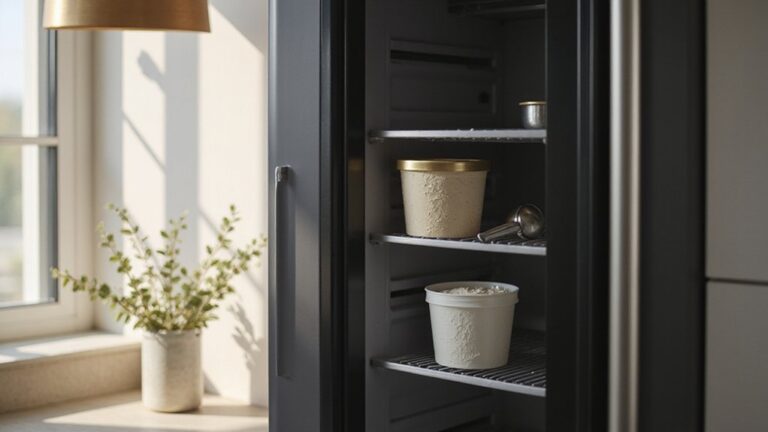
To extend the shelf life of your ice cream cake, proper storage is crucial. First, pre-chill your freezer to its coldest setting and find a flat, stable spot in the back, away from the door. This helps prevent temperature fluctuations that can compromise the cake’s texture. Wrap the cake tightly in plastic wrap to prevent air exposure, then cover it with foil for an extra layer of protection. Place the wrapped cake inside a heavy-duty freezer bag, ensuring complete sealing to block out odors and prevent freezer burn. Pay close attention to sealing cut edges with extra care, as these are more vulnerable. Always store the cake away from strong-smelling foods to preserve its flavor. If you have leftovers, slice them into individual portions before refreezing, and label each with the date to track freshness. When serving, rewarm each piece individually to maintain optimal texture. Returning the cake to the freezer promptly after serving keeps it fresh longer. For consistent results, avoid the common mistake of placing the cake near the freezer door, as this mimics the temperature fluctuations seen in disposable chafing dish setups.