How Many Cups Is a Scoop of Ice Cream? Numbers You Should Know
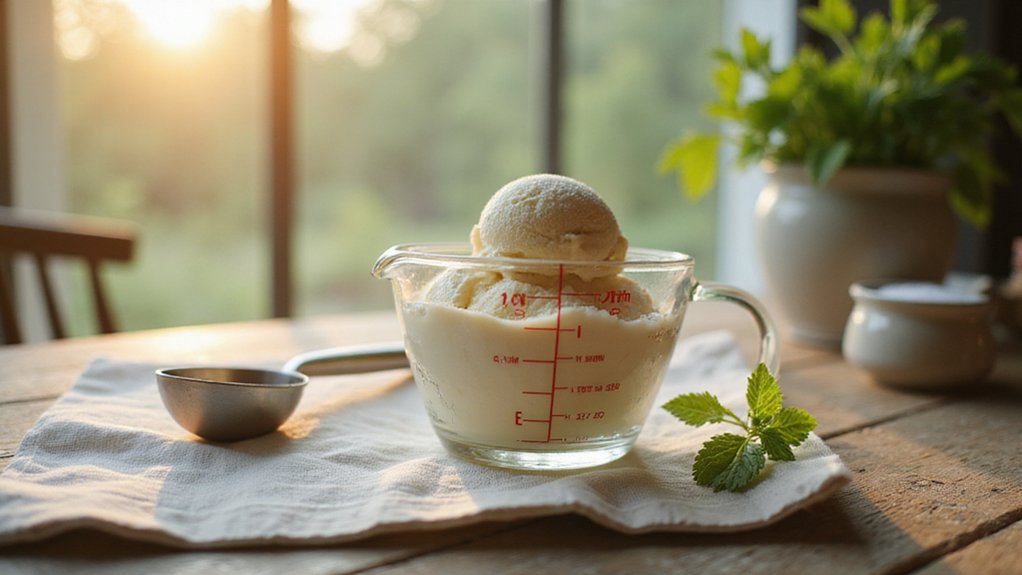
Wondering how much ice cream you’re actually getting in a scoop? Usually, a standard scoop is about half a cup, or four fluid ounces.
But the size of your scoop can change this amount, especially with different scoopers like #10 or #12.
Keep reading to see how these variations can impact your servings.
So, How Many Cups Is One Scoop of Ice Cream?
One scoop of ice cream typically equals about 1/2 cup, which is roughly 4 ounces by volume. This measure is widely used for standard dessert servings. Keep in mind that the actual volume can vary depending on the size of your scoop and how densely packed the ice cream is. For example, a #16 disher gives about 1/4 cup, while a #10 disher yields around 7/16 cup. Looser scoops tend to measure closer to the 1/2 cup mark, while tightly packed scoops are smaller. For those seeking perfect pairings, quality, performance, and value can guide your choice of ice cream toppings, much like reviewing nacho cheese sauce. For consistency, pairing your scoop type with your desired flavor combinations is helpful. Smaller scoops allow you to mix multiple flavors without overflowing your bowl. Proper storage also makes a difference: keep ice cream at 0°F and scoop when slightly softened. Softer ice cream comes out more smoothly and helps you avoid air pockets that can distort your measurements. While there is no universal scoop size, estimating one scoop as 1/2 cup remains the most common guideline for standard dessert portions. To maintain accurate measurements, it is crucial to use a freezer that prevents freezer burn, which can affect the ice cream’s texture and density.
Why Is the #8 Disher the Most Common Scoop Size?
The #8 disher holds exactly 4 fluid ounces, or half a cup, making it the most common scoop size. This measurement aligns perfectly with standard single-scoop portions used in many recipes and serving practices. Its size strikes a balance between efficiency and presentation, providing a substantial portion without being overwhelming. The #8 disher is favored in commercial kitchens for tasks like forming burger patties, scooping cookie dough, or portioning mashed potatoes. With a bowl diameter of 2 3/4 inches, it ensures a consistent and attractive presentation. Using stainless steel or aluminum materials, you can choose a durable or lightweight option depending on your needs. Proper storage, such as hanging the disher, keeps the spring mechanism and bowl in good condition, extending its lifespan. The 4-ounce capacity simplifies yield calculations, as you get exactly eight scoops per quart, making portion control quick and accurate during busy service. For those using a popcorn maker, a top popcorn pick often recommends a similar utensil for portioning butter or toppings. When setting up your equipment for the first time, initial calibration of any serving tool ensures consistent results just like you would adjust a machine’s temperature before use. For events using chafing fuel, the same concept of sizing ensures proper heat output for food service.
What’s the Real Difference Between a ½-Cup and a 3-Ounce Scoop?
A ½-cup scoop holds about 4 fluid ounces in volume, but because ingredients and density vary, this doesn’t translate directly to weight. A 3-ounce scoop by weight isn’t the same as half a cup by volume. Dense items like gelato pack more weight into a smaller space, while softer, airy textures like soft-serve fill more volume without adding as much weight. This difference affects portion control, calorie counting, and recipe consistency. Because of how ingredients behave, always check whether a recipe or package measures by volume or weight. For accurate portions, remember that denser ingredients or frozen products might need a moment to soften before scooping to avoid hard-to-serve bits. Recent FDA updates shifted standard serving sizes to about two-thirds of a cup, but many labels still reference the old half-cup measurement. For context, nacho chips are often measured by weight or count rather than volume, carrying around 150-160 calories per 1-ounce serving.
Does Cup Size Change the Portion You Get? (4 Oz vs. 5 Oz vs. 8 Oz)
The size of the cup directly influences how much portion you get, regardless of the scoop used. A 4 oz cup requires a tighter fill, often needing a compressed scoop to avoid spills. This makes it ideal for tastings where control and precision matter. A 5 oz cup offers extra headroom, allowing you to use a rounded scoop that looks fuller even if you’re only adding about 1 oz more than in a 4 oz cup. It’s a good choice for balanced single servings. An 8 oz cup can visually deceive the eye; the same scoop appears smaller within it, encouraging larger servings. To achieve consistent portions across different cup sizes, the scoop size remains the same, but how packed or fluffy the contents appear depends heavily on cup capacity. For strict control, stick with a 4 oz cup. For balanced single servings, opt for a 5 oz cup. Use an 8 oz cup when you want to create a sundae or dessert with room for mix-ins and toppings.
How Many Scoops Fit in a Quart of Ice Cream?
A quart of ice cream typically holds about 8 large scoops when using a #8 disher. Since a U.S. quart is 32 fluid ounces, dividing that volume by the scoop size gives the number of servings. A #8 disher usually produces about 4-ounce scoops, so you get roughly 8 servings per quart. If you switch to a #16 disher, which makes 2-ounce scoops, you’ll get about 16 servings. Similarly, a #20 disher yields around 20 smaller servings, each approximately 1.5 ounces. For consistent results similar to making slushies, you can maintain a balanced syrup-to-water ratio to control texture and freezing point. For home users, a soft ice cream machine can help achieve a consistent texture that simplifies scooping. Keep in mind that the texture of your ice cream affects scoop count. Softer ice cream tends to pack more tightly, possibly increasing the number of scoops per quart slightly. However, the scoop size remains the main factor in determining servings. Always match your scoop size to your desired portion to ensure accurate serving sizes and cost control. Many snack enthusiasts also recommend storing your ice cream in top popcorn bags to keep it fresh and prevent freezer burn.
Which Scoop Size Is Best for Home vs. Shop Service?
For home use, a #16 or #20 scoop size is best, offering about 2 ounces per scoop. These sizes help stretch a pint of ice cream further while maintaining a manageable portion size. Smaller scoops are easier to handle, reducing wrist strain and making serving less physically demanding. They also allow for precise and consistent portions, which is helpful for family outings or casual gatherings. To put this in dietary context, this 2-ounce serving contains approximately 150 calories, similar to the calorie load of a single soft pretzel. For achieving a light and fluffy texture, some prefer using refined coconut oil to prevent the scoop from sticking to hard-frozen ice cream. If you are looking for commercial-grade tools, reviewing the top ice cream makers can help you find a machine that keeps your ice cream at the perfect consistency for scooping.
For shop counters, a #10 or #12 scoop works best, providing around 3.2 to 3 ounces per scoop. These larger sizes create a full, appealing look that appeals to customers seeking generous servings. While a #8 scoop is an option, it is mainly suitable if you are charging a premium price, as it yields larger portions that command higher prices. Using a fixed-capacity scoop standardizes portions, helping you keep costs predictable and consistently appealing.