How to Make Popcorn in a Popcorn Machine: Easy Step-by-Step Recipe
Wondering how to get perfect popcorn from your machine every time? Whether you’re aiming for fluffy, evenly popped kernels or just want to avoid burnt batches, knowing the right steps makes all the difference.
By following simple tips like preheating and proper seasoning, you’ll improve your popcorn game easily.
Keep reading for the full step-by-step guide.
Identify Your Machine Type Before You Start
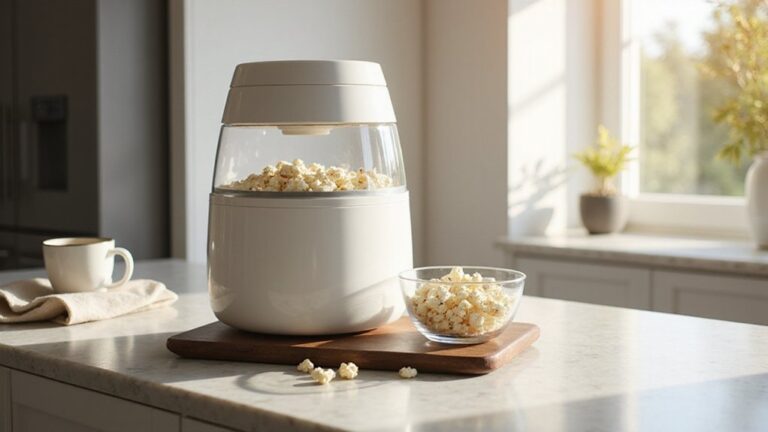
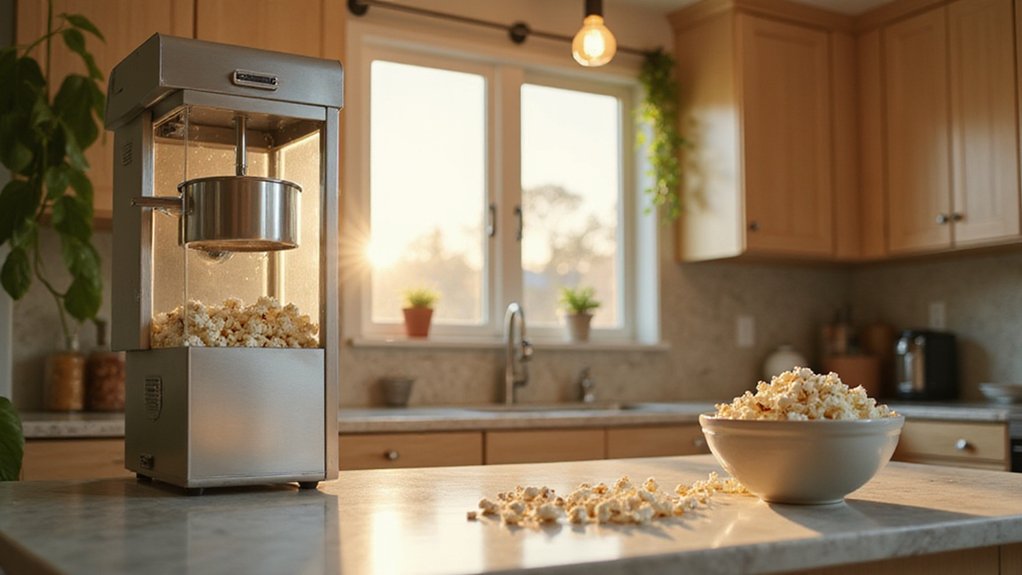
Knowing your machine type is essential for perfect popcorn. Hot-air poppers use heated air and require no oil, making cleanup easier and reducing fat content. However, you’ll need to add flavoring separately to enhance taste. Oil poppers, including stovetop and electric stirring models, rely on oil to create the classic crunchy texture associated with theater popcorn. Commercial kettle machines feature a heated, stirred kettle for large batches, ideal for catering or concessions. For guidance on which machine offers superior performance and value, consult best popcorn bags reviews. For slushie machines, the key to consistent results is using the exact ingredient ratios specified in the recipe.
Match your machine’s physical style to your needs. Countertop models suit home use, while carts are portable for parties, and theater-style machines evoke nostalgia. Check whether your machine agitates kernels with a hand-crank or built-in paddles; even agitation ensures consistent popping and reduces unpopped kernels. Also, consider how easy your machine is to maintain: air and microwave units are straightforward to clean, but oil-based models demand regular degreasing to prevent buildup. Beginners often forget to preheat the kettle before adding oil and kernels, leading to uneven popping.
Finally, verify your batch size. Air poppers typically handle about 4 cups of popcorn per batch, whereas commercial kettles can process up to 32 ounces or more in a single run. Matching your machine to your typical batch size will help you produce the right amount of popcorn efficiently.
Preheat Your Popcorn Machine for 3–5 Minutes
Preheat your popcorn machine for 3–5 minutes before adding oil or kernels. This warm-up period ensures the heating element is ready and helps distribute heat evenly across the kettle. During this time, you’ll see steam rising or feel the kettle’s surface getting hot—signs that it has reached the appropriate popping temperature. Proper preheating protects the equipment and results in more consistent popping. Remember, check your specific machine’s manual, as some units may only need 2–3 minutes. Once the kettle maintains a steady temperature, you can prepare your oil and kernels for immediate popping without needing to rewarm later. For optimal performance, some machines benefit from a heat lamp to keep popped corn warm after cooking, similar to high-wattage infrared models used in commercial settings. This approach mirrors cold storage techniques that rely on insulation rather than electricity to maintain temperature stability. Beginners often overlook this step, a common mistake that can lead to burnt kernels or uneven popping.
How Much Oil and Kernels Your Popcorn Machine Needs
For a standard 4-ounce popcorn machine, use 1/4 cup of oil and 1/2 cup of kernels. For a 6-ounce machine, match 1/4 cup of oil with 3/4 cup of kernels. An 8-ounce machine needs 1/3 cup of oil and 1 cup of kernels. For larger kettles, scale the amounts proportionally; for example, a 16-ounce machine requires about 2/3 cup of oil and 2 cups of kernels. Avoid overfilling the kettle, as crowding reduces popping efficiency. Store your kernels in an airtight container to keep them fresh longer. Add your preferred popcorn seasoning after popping, not before, to enjoy the best flavor.
Step-by-Step: Loading Your Popcorn Machine
To load your popcorn machine safely and efficiently, start by placing it on a dry, level surface away from moisture. Ensure the kettle is thoroughly clean before beginning. Turn on the controls in the proper order—first, power on the main switch, then activate the heating and stir functions if applicable. For hot-oil models, add oil first and let it heat up before adding kernels. Understanding the heating element and stirrer work together to distribute heat evenly for optimal popping. Use the manufacturer’s scoop to measure the kernels carefully, making sure not to exceed the batch limit to prevent spills or uneven popping. Close the kettle lid gently to keep the heat inside and avoid splatters. Do not add any flavorings during loading unless the manual specifies otherwise; add flavoring only after popping. Keep your hands and face away from the hot kettle opening to avoid burns. If your machine lacks a quality build, consider options like the best machine for popcorn that have received high marks from reviewers. Once loaded, secure the lid firmly, engage any stir or rotation functions if your model has them, and turn on the warming light to keep your popcorn hot and fresh. Store any unused kernels in a cool, dry place to maintain their quality. Only initiate the popping cycle after the machine is fully loaded for the best results. For large batches, maintaining a consistent steam level around the serving area helps keep buns soft and ready for filling.
When Your Popcorn Machine Is Done Popping
When your popcorn is done popping, you’ll notice the popping slow down significantly. Specifically, a sharp decrease in frequency signals it’s time to turn off the machine. Once you hear only a few pops every 2 to 3 seconds, the batch is essentially finished. Don’t wait much longer, as continuing to run the machine can risk scorching your popcorn. Most popcorn machines have a maximum run time of 2 to 3 minutes, so stick to that guideline. Immediately turn off and unplug the machine once popping subsides to prevent overheating and preserve flavor. Expect some unpopped kernels to remain; that’s normal. Ignore any lingering noise, as it’s just the last kernels finishing. Promptly shutting down ensures your popcorn turns out perfect. For an enjoyable pairing, consider serving your popcorn alongside a top pick from quality cake and ice cream cone reviews for sweet treats. To avoid uneven results, ensure your machine’s air popper design promotes proper heat circulation throughout the popping cycle. Additionally, using a machine with good insulation can protect against freezer burn that might affect stored toppings.
How to Empty a Hot Popcorn Machine Safely
To empty a hot popcorn machine safely, first turn off all switches and unplug the unit from the electrical outlet. Never rely solely on switches—hot components can still transfer danger. Allow the machine to cool naturally; do not attempt to cool it with ice or water, as rapid cooling can cause damage or injury. Typically, wait at least one hour or until all metal surfaces are fully cooled before proceeding. For a similar process, candy floss made at home requires the same patience, as a sugar mixture must cool gradually to avoid crystallization or burns. Use proper tools such as heat-resistant gloves and handles or knobs to manage hot parts. Never touch the kettle or tray with your hands directly. Once cooled, carefully remove any unpopped kernels or debris from the tray, avoiding contact with hot surfaces. To deal with residual water or cleaning substances, pour them into a stable container placed on a protected, non-slip surface to prevent splashes or spills. For an alternative cooling method, shaved ice snacks require careful handling to avoid burns from residual heat. Keep the machine disconnected from power during and after emptying to ensure safety.
Seasoning Tips for Your Popcorn Machine’s Batch
Add seasonings immediately after the popcorn machine finishes popping while the popcorn is still warm. To improve adhesion, lightly mist the popcorn with oil or melted butter before sprinkling your desired flavors. Practice flavor layering by applying a fine dusting of popcorn salt, tossing the popcorn to distribute evenly, then adding your next spice and tossing again. This method prevents clumping and ensures each kernel is coated. Avoid dumping all seasonings at once; instead, gradually add them during tossing to create a more complex flavor and ensure consistent seasoning throughout your batch. For best results, consider using countertop ice cream makers as a reference for quality layering techniques. A slush machine relies on its refrigeration system and auger to consistently mix and freeze a liquid solution, preventing ice crystal formation for a smooth texture. Achieving this level of consistency in your seasoning process mirrors the patience required for proper dough kneading in soft pretzel recipes.
Clean Your Machine to Make It Last
After enjoying your popcorn, cleaning your machine immediately helps extend its lifespan. First, turn it off and unplug it, then let it cool for 30 to 60 minutes. Remove leftover kernels from the chamber to prevent burnt debris and potential clogs. Take out the kettle and wipe the inside and outside with a soft cloth dampened with warm water and mild soap—never immerse electrical parts in water. Use a brush or a small broom to sweep crumbs into the tray, then clean the base with a damp cloth. For the glass and metal surfaces, stick to food-safe cleaners to avoid damage. For a more informed choice, refer to Top Popcorn Picks for your popcorn maker to compare the best options. Establish a regular maintenance schedule: deep clean the kettle weekly, inspect cords and vents for wear, and ensure all parts are completely dry before reassembly. To avoid residue buildup, always follow the manufacturer’s guidance on safe cleaning steps for your specific model. Only use recommended cleaning supplies to prevent damage and preserve your machine’s functionality. Keeping debris and residue out reduces odors and smoke, which helps your popcorn machine last longer and perform better over time. For a Whirley Pop, wiping the metal stirring mechanism with a damp cloth prevents oil buildup and keeps the crank turning smoothly.